Creating the environment for teams and products to succeed.
I have wanted to pull this page together for a while. Throughout my career, I’ve been fascinated by how teams collaborate: how a shared idea becomes a shared commitment, how creative people do their best work, and how that work comes together into something we can deliver consistently, on time and within budget.
>> something about translating this to system thinking and designing software.. user flows, connection points etc
>> something about translating this to system thinking and designing software.. user flows, connection points etc
This page brings together artifacts, experiences, and lessons from that journey. Across children’s educational products, productivity software, connected devices, and global design organizations, I’ve seen the development cycle change alongside the methods, frameworks, roles, tools, and expectations surrounding it. My approach has evolved with those changes, while certain principles have stayed with me: establish a clear purpose, define roles and responsibilities, capture how the work happens (Workflow/Schedule), sense of time, and recognize what the team achieves.
>>> Schedule as a list, sense of time, gantt charts, timelines etc
>>> Schedule as a list, sense of time, gantt charts, timelines etc
With AI having such an impact on the design cycle and an increasing desire to have agents automate everything it feels like a useful moment to revisit those lessons.
>>> early lessons are that companies (specifically functions outside Product are failing due to the lack of how they work, generically referred to as workflow.
What can we hand over to automation? What still requires human judgment, creative space, and shared understanding? For me, the opportunity is to use these capabilities to create more room for people to think, explore, and collaborate, while remaining deliberate about the outcomes we are working toward.
>>> early lessons are that companies (specifically functions outside Product are failing due to the lack of how they work, generically referred to as workflow.
What can we hand over to automation? What still requires human judgment, creative space, and shared understanding? For me, the opportunity is to use these capabilities to create more room for people to think, explore, and collaborate, while remaining deliberate about the outcomes we are working toward.
This is an evolving reflection on the conditions that help teams succeed: the practices I’ve adapted, the assumptions I’ve reconsidered, and the principles that continue to shape how I lead.
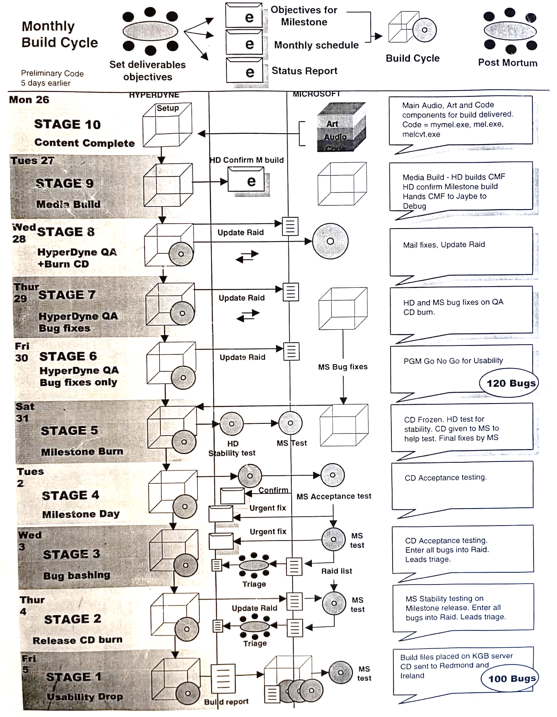
Microsoft Product Cycle
Some words about
Microsoft Network (MSN) CarPoint
My Roles
Insert 3 tier production - relate this to
Charles Handy - Management Styles (1998)
How these phases have
>> Diagram over a team org chart
Link to book
Charles Handy - Management Styles (1998)
>> Office Design Product Cycle 2003
>> Office Design Product Cycle 2003
>> Dave Landis
Program to Product Management
My Roles
The backlog trap, Kellogg Business School for Product Strategy
Related
Draft Content
>> Pioneering days - Film Production - Pre production -
>> Pioneering days - Film Production - Pre production -
Microsoft Product Cycle
Some words about
Some words about
Microsoft Kids Group
My Role
My Role
Microsoft Network (MSN) CarPoint
My Roles
Insert 3 tier production - relate this to
My Roles
Insert 3 tier production - relate this to
What are we talking about when we say Software Product Development Lifecycle
How these phases ha
How these phases ha
How these phases ha
How these phases ha


Core Principles
1. Establish a vision and mission
Create excitement and purpose around that vision (Leadership Style reference). More to add here
Kids group
2. Defined Roles and Responsibilities
Something
"In the SQUAD we trust"
3. Capture and communicate your process (Workflow) be flexible
Point to
Be flexible
Use the same language, be clear with criteria for a milestone
Milestone Definition
Related - Definitions
4. Sense of time
Point to
"Respect the Dev"
5. Celebrate the wins and reflection
quality, sense of completion achievement, recognition
Related - High-Performance Teams | Creativity | Frameworks
1. Establish a vision and mission
Create excitement and purpose around that vision (Leadership Style reference). More to add here
Kids group
2. Defined Roles and Responsibilities
Something
"In the SQUAD we trust"
3. Capture and communicate your process (Workflow) be flexible
Point to
Be flexible
Use the same language, be clear with criteria for a milestone
Milestone Definition
Related - Definitions
4. Sense of time
Point to
"Respect the Dev"
5. Celebrate the wins and reflection
quality, sense of completion achievement, recognition
Related - High-Performance Teams | Creativity | Frameworks